
A Prysmian subsea cable will be used to connect the Klaipėda LNG terminal to the electricity grid
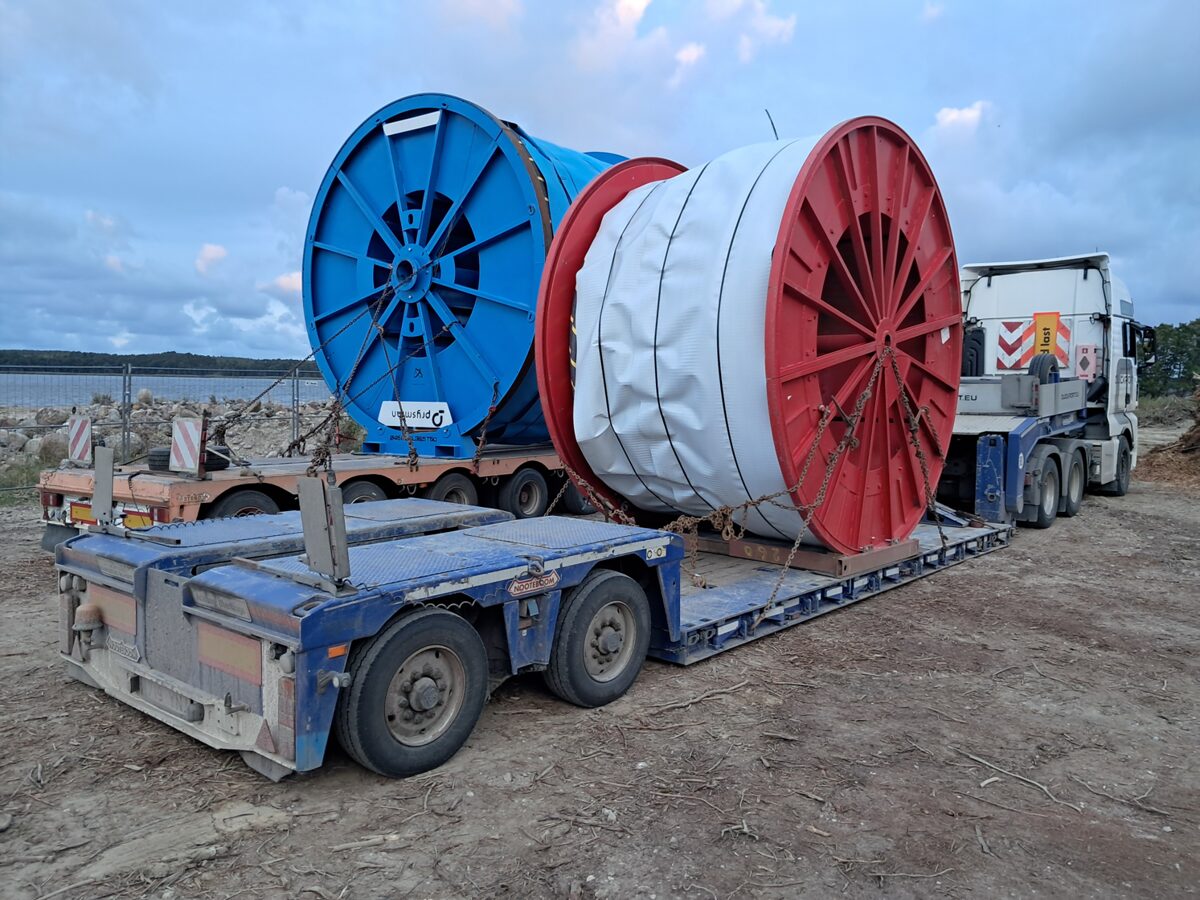
The electrification of the Klaipėda liquefied natural gas (LNG) terminal has reached a significant milestone: a 3.88-kilometre-long submarine cable has reached Lithuania; it forms part of the project’s approximately 6.5-kilometre-long power cable. The aim of the project is to start supplying shore-side electricity to the LNG storage and regasification vessel Independence, owned by KN Energies, which will reduce the vessel’s emissions and improve the terminal’s energy efficiency.
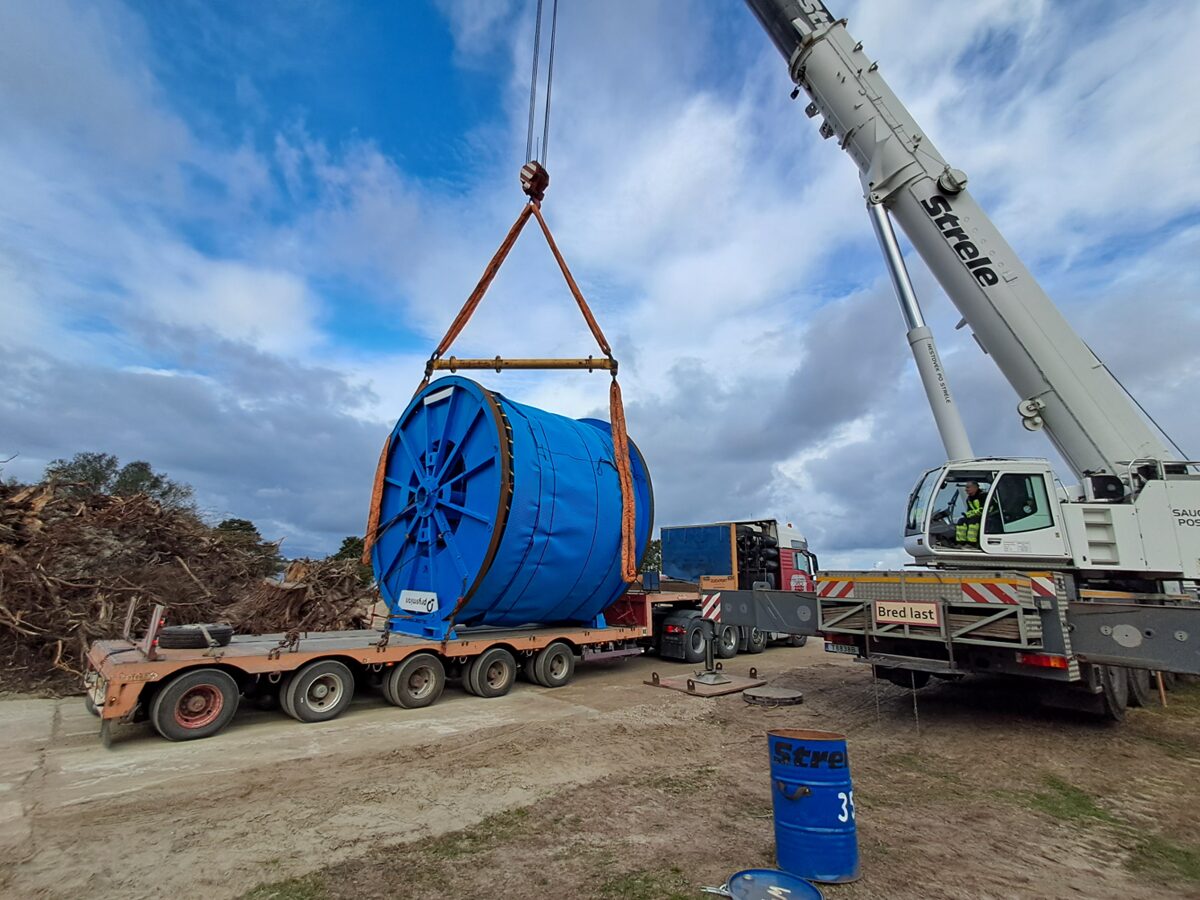
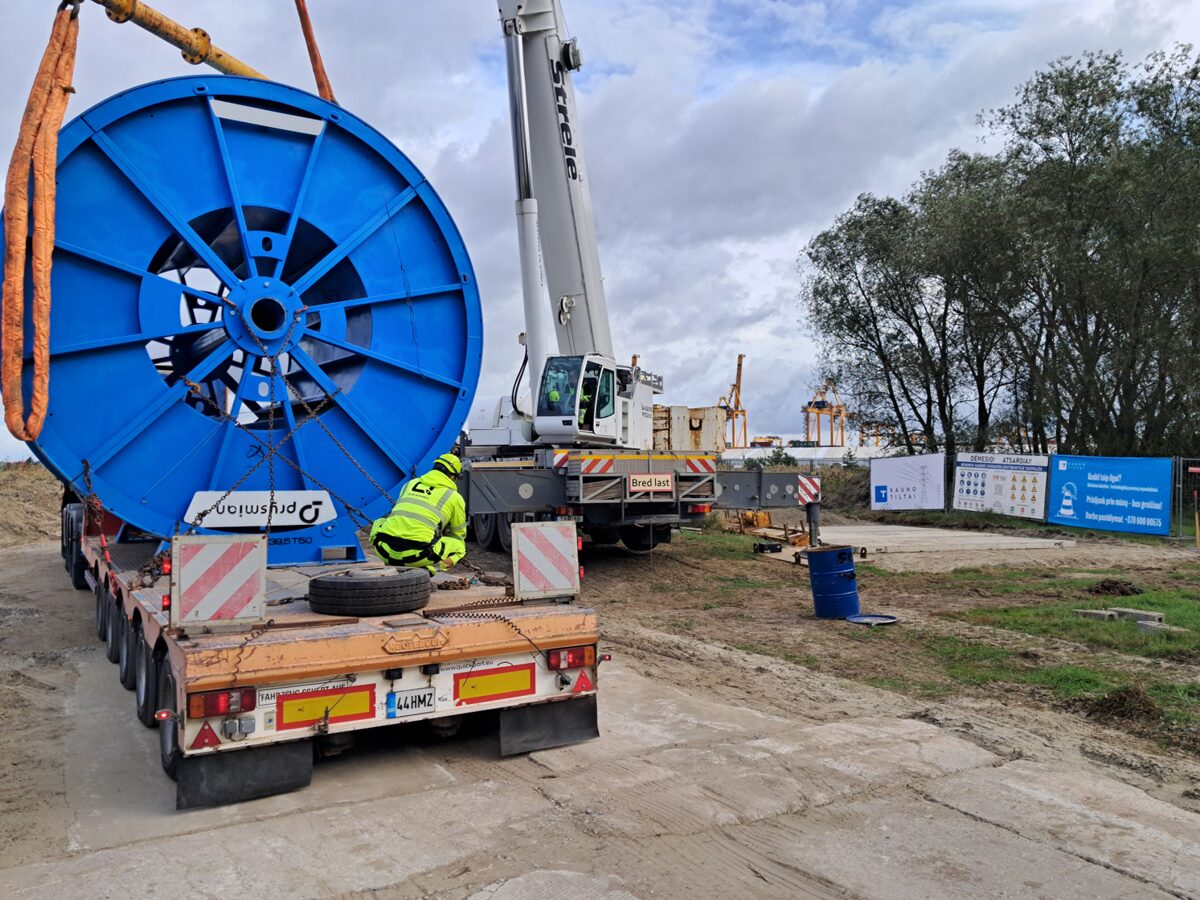
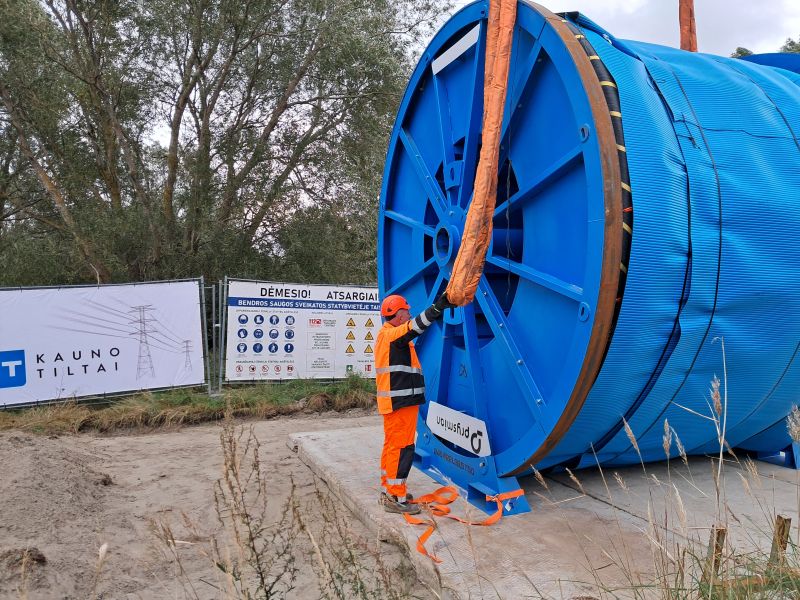
The 30 kV submarine cable was manufactured by Prysmian at its Pikkala plant in Finland, and the client is AB Kauno tiltai, the main contractor for the design and construction of the electrical connection. Due to the cable’s length and weight, a route through Estonia was chosen for its transport to Lithuania. The cable was transported by ship from Finland to Estonia, from where it continued its journey overland to Klaipėda. Transport was made more difficult by the cable’s heavy weight: it was wound onto three reels, the largest of which – a 2.5-kilometre-long section of cable – weighed 50 tonnes together with the reel.
Integrated Sensor System and AI-Driven Cable Monitoring
Rait Kuhlberg, Sales Manager for Medium and High Voltage at Prysmian Baltics, says that Prysmian assisted in the development of the entire cable solution:
“We also offer solutions for splicing and connecting cables; the terminations and splice joints designed for this purpose were manufactured at Prysmian’s plant in Cornimont, France. In addition, shoreline anchoring, specifically designed for this project and this cable, is being used; the anchors for this were manufactured at Prysmian’s plant in Bishopstoke, England.”
The marine cable is equipped with EOSS (Electrical and Optical Sensing System), which means that the fibre-optic cables integrated into the cable enable the detection of factors such as temperature and vibration:
“The cable does not require separate sensors to measure temperature and detect vibration. The system uses artificial intelligence to learn the normal noise levels in the area and alerts users to any anomalies, such as unusual sounds or vibrations near the cable,” explains Kuhlberg.
He adds that, for this particular project, the client is having a temperature measurement solution (DTS) installed, but has not yet made a final decision on whether to implement an acoustic monitoring system (DAS).
Kuhlberg states that establishing such a connection requires not only the selection of a suitable cabling solution but also precise planning of the entire installation process. In a subsea environment, the cable must meet strict technical requirements and withstand harsh conditions, whilst maintaining its reliability for many years. Darius Šilenskis, CEO of KN Energies, adds that the project is one of the first solutions of its kind in the world and represents a unique addition to the company’s technology portfolio.
Complex Engineering Works Beneath the Curonian Lagoon
Most of the underwater power cable will be laid beneath the Curonian Lagoon. The subsea cable, which is 11 centimetres in diameter, is being laid along a route determined by horizontal directional drilling (HDD), reaching a depth of 45 metres in some places. At the same time, a 2.5 km section of underground cable is being laid. The construction of the entire electricity connection comprises both the route running through the territory of the city of Klaipėda and beneath the Curonian Lagoon, as well as the construction of the infrastructure required for the supply of electricity from the shore on land, at the terminal quay and on board the vessel.
Electricity Generated Onshore Reduces Emissions
At present, the electricity required by the Independence is generated by the engines fitted to the vessel. Once the electrification project has been completed, the vessel will be able to draw electricity from renewable energy sources on land. Preliminary estimates suggest that this will reduce CO₂ emissions from the Klaipėda LNG terminal by around a third. Aldas Rusevičius, Managing Director of Kauno tiltai, states that whilst the length of the cable is measured in kilometres, the connection begins with the smallest details, and it is the construction company’s task to ensure that the complex engineering work in the Curonian Lagoon guarantees a smooth and safe supply of electricity to the vessel in the future.
The final stage of the project will involve resolving the issue of electricity transmission from the onshore electricity grid to the vessel. To this end, the Estonian company ShoreLink developed a suitable shore power solution. A special cable for shore connection solutions, manufactured at Prysmian’s plant in Neustadt, Germany, plays a key role in this solution:
“The reliability of the shore-to-ship power connection is ensured by well-designed technical systems, particularly in the case of specific types of vessels such as floating storage and regasification units (FSRUs),” says Kaupo Läänerand, Director of Business Development and Strategy at ShoreLink. “The TankerLink LongLine solution has been designed to make connection as simple and quick as possible, whilst being capable of performing its task in all the weather conditions that prevail in the region. The smoother the connection, the more time the ship can spend at the quay connected to the shore power supply, thereby reducing the need to use auxiliary engines.”
The electrification of the terminal forms part of operator KN Energies’ aim to reduce the environmental impact of its operations. According to the company’s plans, greenhouse gas emissions are to be reduced by 30 per cent by 2030, and the company aims to achieve climate-neutral operations by 2050.
The design and construction work for the electricity connection to the Klaipėda LNG terminal is being carried out by AB Kauno tiltai, the successful bidder in the public procurement tender. The value of the contract concluded between KN Energies and the contractor is over 19.3 million euros, plus VAT. The European Union has allocated six million euros in funding for the project, which is due to be completed in May 2028.
Project key figures:
- Client: KN Energies
- Main contractor: AB Kauno tiltai
- Contract value: over EUR 19.3 million (excl. VAT)
- EU co-financing: EUR 6 million
- Planned completion: May 2028